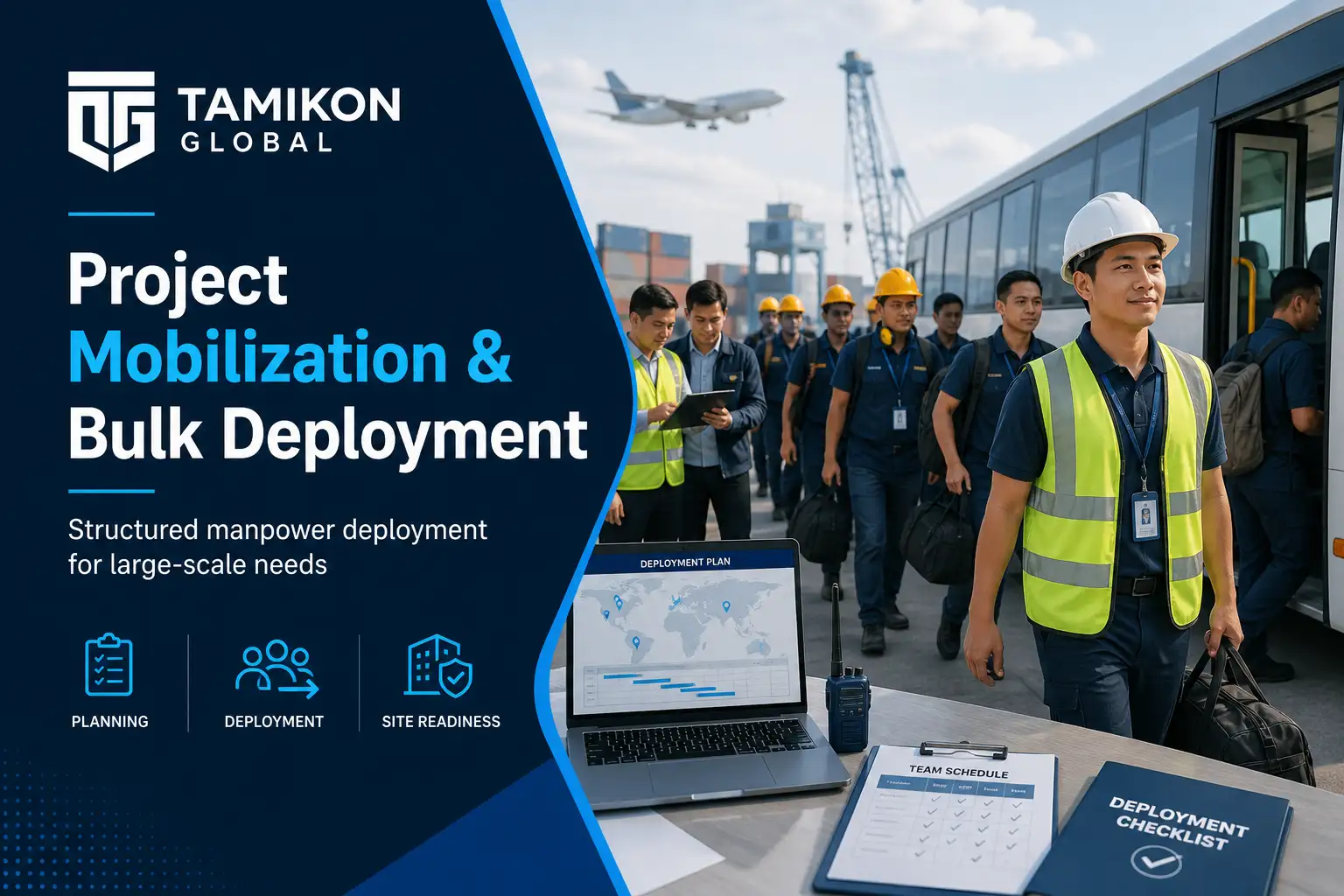
Skilled Trades Workforce Shortages and Project Support
Skilled trades shortages can affect project schedules, bid confidence, field execution, and workforce continuity. This guide explains how employers can think about skilled trade capacity, project mobilization, and structured workforce support through Tamikon Global Inc.
When qualified electricians, welders, HVAC technicians, pipefitters, equipment operators, and other trades are difficult to secure, employers need more than casual recruiting. They need a structured sourcing, screening, and mobilization pathway.
- Trade-specific role definition and screening expectations
- Project-aligned sourcing, shortlisting, and mobilization support
- Partner-backed execution through qualified workforce channels
- Clear commercial scope, documentation discipline, and account coordination
Skilled trades workforce shortages are not just a hiring issue. They can become an execution issue when projects need technical labor at the right time, in the right volume, and with the right practical capability.
For construction contractors, engineering firms, infrastructure operators, manufacturers, industrial employers, and project-based businesses, skilled labor gaps can slow mobilization, increase coordination pressure, and make it harder to maintain predictable delivery timelines.
Tamikon Global Inc. approaches this problem through a structured workforce solutions model. The company manages the client-facing relationship, commercial scope, proposal pathway, and coordination process while qualified partners support sourcing, candidate processing, documentation, and workforce mobilization within their approved service responsibilities.
Why skilled trades shortages create project pressure
Skilled trades roles are often tied directly to field execution. When a project cannot secure the right workers, the impact can show up in delayed starts, slower installation work, overtime strain, subcontractor gaps, quality-control issues, and weaker confidence around future bids.
The pressure is especially visible in roles connected to electrical systems, welding, mechanical support, HVAC, plumbing, fabrication, heavy equipment operation, and site-based construction work. These functions are not easily replaced by general labor because they require experience, technical understanding, safety awareness, and sometimes trade-specific testing or certification review.
Schedule reliability
Projects depend on the right trades arriving at the right phase. Delayed labor availability can slow handoffs, compress timelines, and increase the risk of costly rework.
Bid and growth confidence
Employers may hesitate to accept new work when they are unsure whether skilled labor can be sourced, screened, mobilized, and retained at the needed pace.
Operational continuity
Shortages can place more pressure on existing crews, supervisors, and subcontractor networks, creating fatigue, coordination issues, and continuity risk.
U.S. labor-market data reinforces the pressure around technical trades. The U.S. Bureau of Labor Statistics projects electrician employment to grow faster than the average for all occupations from 2024 to 2034, with many annual openings expected from growth and worker replacement needs. For broader construction hiring context, industry guidance from Associated Builders and Contractors has also pointed to significant additional worker needs in 2026.
Which skilled trades usually create the biggest delivery gaps?
Skilled trade demand varies by project type, destination market, regulatory pathway, and employer requirements. The most important starting point is not simply asking for “workers.” It is defining the specific trade category, practical experience level, project environment, testing expectation, and deployment timing.
Electricians and electrical support personnel are often tied to building systems, industrial operations, utilities, data infrastructure, maintenance, and construction sequencing.
Welders, fabricators, pipefitters, and related trades may require stronger skill validation, project-specific experience review, and employer-aligned testing expectations.
HVAC technicians, mechanical support workers, and industrial maintenance personnel support installation, service, troubleshooting, and operational continuity.
Carpenters, masons, painters, plumbers, and site support trades help employers maintain project flow across buildout, finishing, maintenance, and repair environments.
Heavy equipment operators and machine operators require practical experience, safety awareness, and clear employer-side expectations around equipment type and jobsite use.
Project support needs structure, not scattered recruiting.
Skilled trades shortages are difficult to solve through disconnected sourcing alone. Employers need a clear project requirement, role definition, candidate screening process, documentation pathway, deployment plan, and communication rhythm.
Tamikon’s role is to simplify that structure for the client. The company manages the commercial relationship, service packaging, proposal process, client communication, and account coordination while qualified partners support backend sourcing, processing, and mobilization activities.
Employer defines trade roles, headcount, destination, timeline, project environment, and skill expectations.
Tamikon organizes commercial scope, proposal terms, communication flow, and account coordination.
Qualified partners support sourcing, screening coordination, documentation, processing, and mobilization.
The engagement is managed through clearer scope, reporting, escalation, and replacement coordination where agreed.
Why general recruiting is not enough for skilled trades project support
A skilled trades requirement is usually more complex than a simple resume search. Employers often need to know whether candidates have the right trade background, the right jobsite exposure, the right documentation readiness, and the right fit for the project’s technical environment.
Trade-specific validation
Skilled trades may require experience review, trade testing coordination, certification checks, portfolio review, or employer-led technical interviews before final selection.
Batch and phase planning
Project teams may need workers in phases rather than all at once. A structured deployment plan can align trade groups with project milestones and site readiness.
Documentation discipline
International deployment depends on complete documentation, lawful recruitment pathways, employer approvals, medical requirements, and destination-market processing conditions.
For employers researching lawful hiring and deployment pathways, public resources from the U.S. Department of Labor Foreign Labor Certification, USCIS Working in the United States, and the Philippines Department of Migrant Workers licensed agency inquiry can provide general context. Specific hiring pathways should always be reviewed against the employer’s market, role category, and legal requirements.
What employers should define before starting a skilled trades workforce search
The stronger the requirement, the easier it is to scope, price, screen, and coordinate. Before beginning a skilled trades workforce conversation, employers should prepare enough information to separate serious project demand from general hiring interest.
List every trade category, required headcount, years of experience, jobsite environment, equipment exposure, and must-have qualifications.
Identify target start dates, phased mobilization needs, ramp-up schedule, urgency level, and whether the requirement is tied to a specific project milestone.
Clarify whether the employer requires trade tests, video interviews, technical documentation, certification review, references, or practical work samples.
Define work location, destination-country expectations, visa pathway assumptions, employer-side documentation, and any licensing or site access requirements.
Confirm whether the engagement includes sourcing only, deployment coordination, replacement support, project mobilization planning, or broader workforce continuity support.
Where Tamikon’s skilled trades project support fits
Skilled Trades Deployment is best suited for employers that need technically qualified workers for construction, industrial operations, plant maintenance, infrastructure delivery, fabrication, and mechanical support environments. It can also support project-based employers that need phased workforce mobilization tied to site schedules or operational ramp-ups.
Construction and engineering
Contractors and engineering firms can use structured skilled trades support for project ramp-ups, trade shortages, and site-based manpower planning.
Manufacturing and industrial
Industrial employers may need maintenance technicians, welders, machine operators, fabricators, and mechanical support workers to maintain output and facility continuity.
Infrastructure and mobilization
Larger projects may require phased trade groups, bulk deployment planning, and a clearer coordination model between client requirements and partner-backed execution.
Skilled trades shortages require a more organized workforce pathway.
When trade labor becomes difficult to secure, the answer is not simply more outreach. Employers need sharper role definition, better screening structure, documented service boundaries, partner-backed sourcing support, and a clearer path from workforce need to project execution.
Tamikon Global Inc. helps clients approach skilled trades workforce pressure through structured deployment packages, centralized communication, commercial discipline, and qualified partner support behind the scenes.
FAQ: Skilled trades workforce shortages and project support
What causes skilled trades workforce shortages?
Skilled trades shortages can be caused by rising project demand, retirements, limited training pipelines, regional labor competition, certification requirements, project timing, and the difficulty of finding workers with specific hands-on experience.
Which skilled trades can Tamikon support?
Tamikon’s skilled trades deployment model may support welders, electricians, plumbers, carpenters, masons, painters, HVAC technicians, fabricators, pipefitters, heavy equipment operators, machine operators, and industrial maintenance personnel depending on client scope and partner capability.
How does Tamikon help with project support?
Tamikon helps structure the commercial relationship, role scope, service pathway, communication rhythm, and deployment coordination while qualified partners support sourcing, screening coordination, documentation, processing, and mobilization activities.
Does Tamikon guarantee visa approvals, trade-test pass rates, or deployment dates?
No. Timelines and approvals may depend on government processing, destination-country requirements, documentation readiness, employer-side approvals, medical results, licensing conditions, and candidate availability. Any timing expectations should be documented as estimates unless expressly stated otherwise in writing.
What should an employer prepare before requesting skilled trades deployment support?
Employers should prepare role categories, headcount, trade requirements, experience expectations, project schedule, destination market, testing requirements, compensation assumptions, documentation needs, and any special compliance or site-readiness conditions.